Tuesday, September 6, 2022

Fly Fishing the Hopper

 Guys, you've noticed it's been a while since I posted anything on my blog. Cathey and I have been busy helping our daughter's family with their new arrival. Last Thursday, Jenny gave birth to a beautiful eight-pound baby girl.  


Cathey and I are so proud of this little girl!!!

An updated picture of little Hallie at 6 months
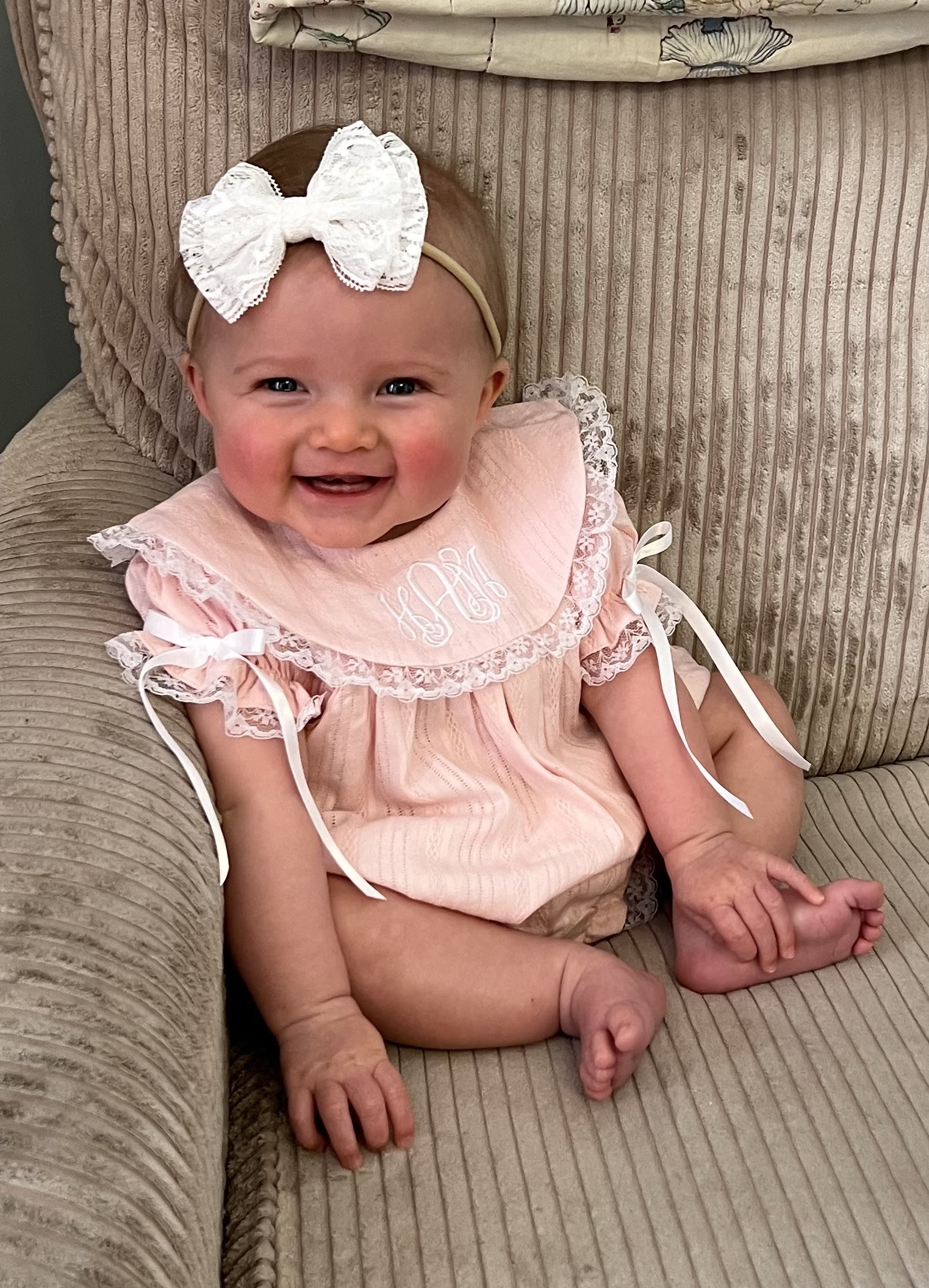
We have kept a busy pace traveling from Jasper to Springhill, Tennessee, these past weeks. It was worth every mile we made to get to this precious little girl. Hallie Mae is 8 weeks old in this picture. I wanted to share an updated pic from the original post image. Her brothers and sister are CRAZY about this little girl!!!

We are back home for now but will return to Springhill next Sunday.  We will be staying 8 days with our daughter and children while B.T. is in California on a business trip. We're glad to be of service, especially when a newborn is too whole and spoil. 


I made a few fishing trips last week on Smith that I wanted to share with you guys. 
This past Thursday, Jeff and I fished Ryan Creek on Smith at daylight and landed some quality bass and bluegill. The bluegills were not hitting the poppers, so I tied on the hopper a fly that I hadn't fished this season. The reaction to this fly was some of the most aggressive hits I have seen this year. All the big bulls on this trip had the hopper lodged in their throat. In other words, they were hungry for an insect in the form of a brown grasshopper. They were hitting the hopper 20 to 30 feet from the rock walls. Moving the hopper slowly on the surface film got their attention. When you land this size bluegill using a 4 wt., you think it's bass; the fight is aggressive. Jeff and I agreed we could be in for one great fall fishing season!
What makes landing these big bulls so much fun to catch using the fly rod is the surge after surge they make trying to break off. There is a big difference when landing these fish spawning in shallow water instead of fishing for them in water depths of 20 to 30 ft. Simply put, the water depth is their friend when trying to break free. 
This was my first copper nose bluegill to ever land on Smith. Sorry I don't have a video showing the fight this fish put forth, but Jeff and I thought it was a spotted bass in the 12 to 14-inch range; to our surprise, it was this beauty!
Jeff started the morning off fishing under the lights near the many piers on the lake. We stopped at our first light at 5:30. As I moved in slowly to the light, we saw three quality bass feeding just under the submerged light next to the pier. It only took a couple of casts to get the attention of one of the larger bass. The fish moved slowly to the Boogle Bug popper and sucked in. After the take, the fish started heading for deep water and really didn't realize it was hooked until Jeff made contact with the fish. At that point, the fish had its way with the 4 wt. Jeff was using and broke off. 
The fish in this video is Jeff's redemption bass, smaller than the one he lost, but a quality largemouth. We will be back fishing this light in the coming weeks with a heavier-weight fly rod. Stay tuned!

Forgot---one last note, I'm saving the trout fishing below the dam for cooler weather and the winter months---the season ends on the lake in November

Sunday, August 7, 2022

The Redworm and the Fly Rod

 Most fly fishermen will tell you they don't use live bait when fishing with a fly rod. I've never seen anyone using live bait fishing with the flyrod on the Sipsey. I have seen many individuals on the Sipsey using a spin cast fishing with redworms, corn, or crappie nibbles.  

Live bait works when artificial flies and lures will not produce. Just ask my daughter about the success of live bait fishing when she would go with me years ago and fish the many nooks on Smith for bluegill, catfish, and bass. She was more into live bait fishing than my son.

So many memories here, Jenny was a junior in high school when she landed the largest bluegill she ever caught fishing with me on Smith. She was using a cricket fishing with her 7 1/2 ft. micro-light combo. I've never been able to convert her to fly fishing. She still loves to fish the cricket for the bluegill when she has the time to go. Three children and another little girl on the way keep her occupied these days. 
At some point in one's fishing career, they usually land a fish they never forget. This was the case a couple of weeks ago when l landed this supersize Shellcraker or Redear as some would call this fish. What got the big females' attention along with the two quality size bulls was live bait. The live bait thing is something I've never tried using the fly rod on Smith. You might say that anything I try new when it comes to fishing is always a plan in advance for me and this type of fishing was no exception. First, I wanted to get as deep as possible using a sink-tip line and a tiny bb shot crimped onto my 5X tippet about 6" above the hook. I found it is best to tie a knot in the tippet 6 inches above the hook to keep the bb shot from slipping to the eye of the hook when casting a small redworm. The bigger worm was difficult to stay on the long shank hook. The long shank hook is best as opposed to the short shank because you can thread more of the worm onto the long shank hook. I found even with false casting the worm would stay in place. So, in reality, if you want to think of the live worm as a nymph you can, which gives you the feeling of fishing a soft nymph with a scent. On this particular morning, nothing was happening even a nymph fish slow wouldn't produce. The poppers never got any attention from the bass or bluegill. This time of year on Smtih the fishing is extremely slow due to the fast pull-down on the lake. Receding water on any body of water is not the ideal situation to catch fish!

Saturday, June 25, 2022

The Versatile Caddis Fly

 When one thinks of the Caddis Fly they relate it to fly fishing for trout. I have fished this fly numerous times on the Sipsey mainly using it as an indicator fly. There were times when I would get a trout to inhale the Caddis while slow drifting a nymph under it. Which was a plus because I was trying to get the trout to take a smaller nymph drifting below. I use the traditional dry-dropper combo more now on the Sipsey because of the fishing pressure. I remember previous years fishing the Sipsey I never used the dry-dropper combo. I only fished a nymph using the various strike indicator on the market. 

On my last trip to the Sipsey, which was a bust for me, no trout touched; started me thinking of using this fly to fish for the giant bluegill on Smith Lake. So two weeks ago, I gave the fly a try casting it near the rock walls in Ryan Creek.

I was impressed with how the bluegills reacted to this fly. At times they would pull it under, and other times they would explode on it. I have written in a past post about how wary these fish can be in hitting a particular color or size popper. So when they are not hitting a popper consistently, it is good to have a backup fly that will get their attention. Enter the Caddis in size ten, but I think a size eight would be better. The extra body on the size eight wouldn't require me to use as much floatant and give the fish a bigger fly to see. Simple to use just cast it using a 3wt. with a 6X tippet and wait for the take while it sits motionless on the surface. I seldom ever move it after it touches the surface. Having success with the Caddis makes me want to give the Adams and the Wulff a try!