Sunday, December 1, 2013

Coping With the Odds on Those Slow Fishing Days

The weather at the tailrace today was cloudy skies and a light breeze. Rain was in the forecast for the following day, so that told me that the trout should be active. Dries were the choice for the morning and after lunch we went with nymphs. Neither proved to be successful this day, but it was good to be on the water with my fishing buddy Charles. We both agreed that our next trip would be below the pump station which is where the bigger trout hang out. Streamers and buggers will be the choice of flies for that outing.
 
Lunch today was pack of peanut butter crackers or “nabs” which is what we use to call these little crackers in Mississippi when I was a kid.
 
Charles managed a nice rainbow from this area; sorry I didn’t get the image I was knee deep fishing a run on the other end of this stretch.
I landed this bow later in the day on an Adams fishing in some of the slower water. The fast current water wasn’t working today with the nymphs and the dead drifting techniques. This trip is what inspired me to write the post about mono and fluorocarbon leaders this past week.
 
On a slow day like this one I really try to analyze why the trout are not taking my offering. Was it the fly selection, presentation, not mending the line properly, locating water holding trout, leader/tippet selection, lack of hatch, or could it have been the trout were just not feeding during that time of day????  Who knows it could have been all the above or it could be that one little thing I haven’t discovered yet. I can say it was not because of persistence and patience on our part, because we gave what we thought was our best on this day.  


Monday, November 25, 2013

Monofilament Leader Verses Fluorocarbon Leader---Opinion???


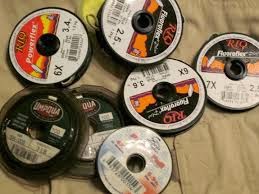
As I was fishing the tailrace the other day I kept noticing how my leader was reacting on the water surface. I realize that if one doesn’t get the line to lay straight on the surface after a cast, then you will encounter a coiled leader and tippet. If I can see the coil tippet then the fish can see the tippet. If you hit that sweet spot in your cast most of the time then there is no coil in the leader or more important in the tippet. It was a slow day on Thursday with Charles and me fishing the tailrace, and on those slow days I tend to notice little things that I wouldn't notice on a more active day. Thursday was one of those days, and that little thing I kept noticing was my tippet coil. Yes the cast plays a part in the coil, but not having your leader and tippet stretched before you ever start fishing also plays a big part in the leader/tippet coil. The more I cast the more I notice something else that many of us I am sure have seen; and that is being able to see your tippet on the water surface in gin clear water. The tailrace is always gin clear and most of the time I can see my leader and tippet line, which is mono. I don’t use the most expensive tippet line, which is fluorocarbon as opposed to your standard mono line. I do feel the fluorocarbon is less visible in the water, but according to research the mono floats somewhat better. Research also tells me that fluorocarbon tends to coil less coming off the spool, which of course would help with fewer coils on the water surface. So with these factors in mind I decided to do a little more research into the mono verses fluorocarbon leader/tippet concept. I thought the following read I found on the internet recently explains most of the issues I was trying to find answers for on Thursday; but I am also interesting in your opinion on mono verses fluorocarbon, and why would you choose either leader?  
 
Differences between Fluorocarbon and Monofilament.

  • Material-fluorocarbon in made from a sophisticated polymer.  Mono is essentially plastic.
  • Fluorocarbon is “More Clear” in clear water (refractive index is nearly identical to water.)
  • Fluorocarbon is more abrasion resistant than monofilament in the same size.
  • Fluorocarbon stretches less (almost none.)
  • UV(sunlight) damages monofilament over time, but not fluorocarbon.
  • Monofilament floats, fluorocarbon sinks
  • Surprisingly, 10lb mono and 10lb fluoro are about the same diameter.

Orvis 'Super Strong' Leaders are monofilament.  Orvis 'Mirage' Leaders are flourocarbon.
Monofilament Fly Fishing LeadersFlourocarbon Fly Fishing Leaders
Dry Fly Fishing: When water conditions are not gin clear, monofilament floats nicely.  And while mono is slightly heavier than water, surface tension holds the mono on the surface.  This will help keep dry flies on the surface.  When fishing a clear lake on a dead calm day, fluorocarbon may be better, because it is more invisible, but you will have to grease you fly to keep it floating.  But most dry fly fishing is on a lake that is tannic, or on a river that has a ripple surface.    Either disguises mono.  So, most of the time, use monofilament when fly fishing with dry flies.
Wet Fly or Nymph Fishing:  Fluorocarbon sinks.  This is a perfect match for fishing subsurface flies.  Even lightly weighted flies sink easily in a pond with fluorocarbon.  On the river, again the fluorocarbon sinks and gets flies down.  Don’t be mistaken, weighted flies are needed and sometimes split shot is still needed.  For anglers who refuse to use indicators, a mono leader with a fluorocarbon tippet creates a nice combination.  Make sure to seat the knot carefully when typing fluorocarbon to monofilament.
Top water popper fishing:  Mono, unless the water is gin clear, then use fluorocarbon.  If fishing a popper/dropper, use fluorocarbon on the dropper tippet.

Fluorocarbon tippets tied to a monofilament leader:  Originally not a good combination, but better now.  The flexibility/stiffness of the two materials may be different, so the tippet might be too stiff or limp for the leader that it was tied. Carefully flex your leader and see if transitions are smooth arcs, or lumpy.  This is easier than it sounds, and surprisingly critical to turning over a fly.  Ideally, use the same brand and type of tippet material and leader.  I prefer a 100% fluorocarbon leader (when using fluorocarbon.)  Also, the fluorocarbon has a shell-like exterior, so knots that are mediocre will hold in a mono to mono connection, but will not hold in a flouro to mono connection.  Make sure the knots seat perfectly, lubricate with moisture, and tighten slowly.  Newer flouro is easier to knot than the original fluorocarbons.
Recently, the makers of most fluorocarbon leaders removed expiration dates.  Simply, it has been found that UV does not degrade the material and the shelf life is perhaps five years or more.  It is also much more abrasion resistant, and the leader just last longer.  This is the economy fluorocarbon.  It is a great tool for the angler when applied properly.